How Google Decides Which Businesses Show Up in Maps Results

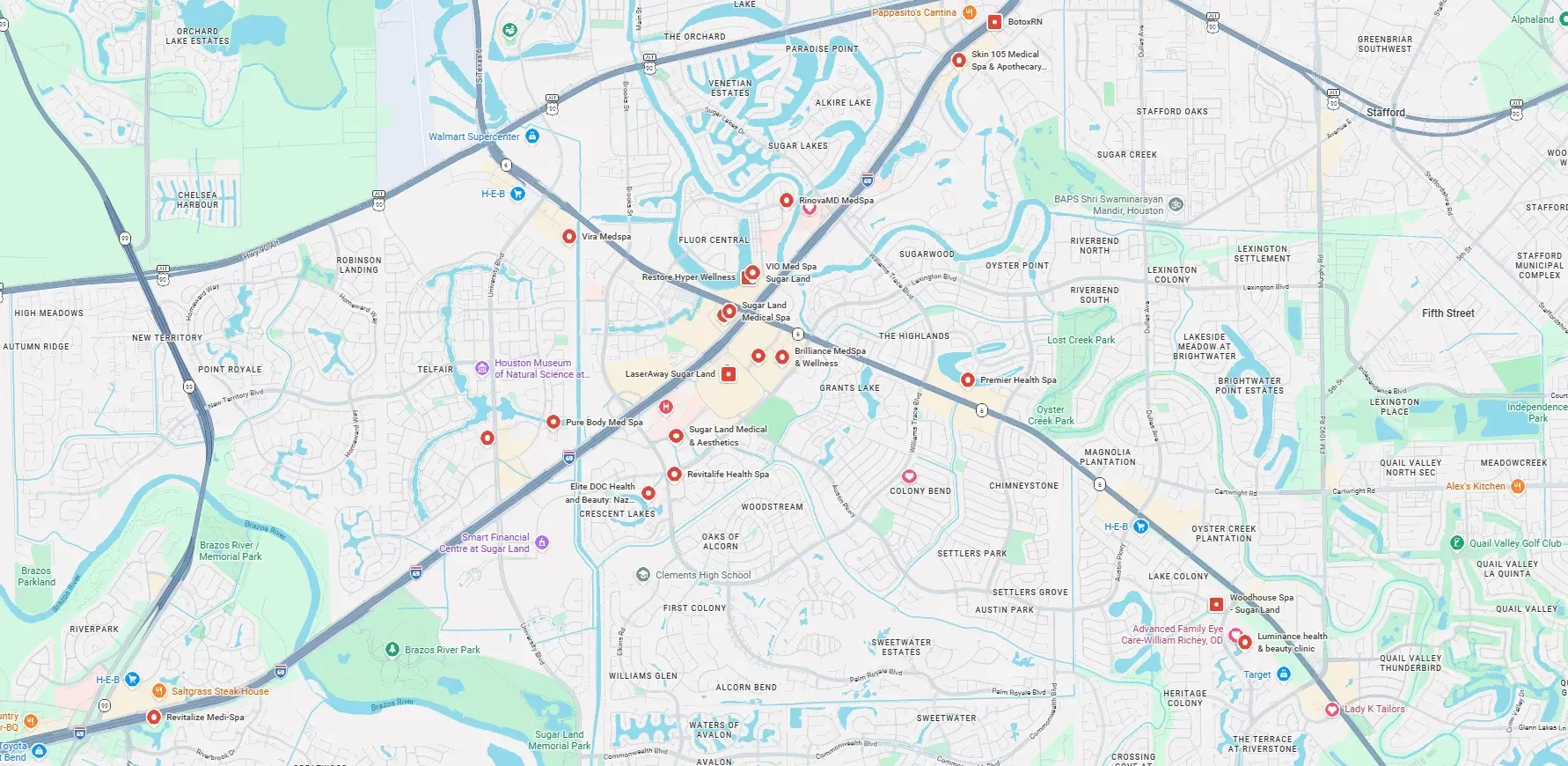
If you’ve ever searched for something like “chiropractor near me” or “hair salon in Sugar Land” and seen three businesses at the top of the map, you’ve seen the map pack.
Those three spots are some of the most valuable real estate on the internet for local businesses.
Naturally, most business owners assume those positions go to:
- the biggest companies
- the ones with the most reviews
- or the businesses spending the most on marketing
That’s not how it actually works.
Google uses a fairly simple system to decide who appears there. It’s just poorly explained and often misunderstood.
This post explains, in plain English, why Google Maps rankings change and what actually determines where service businesses show up.
How Google Really Chooses Who Shows Up
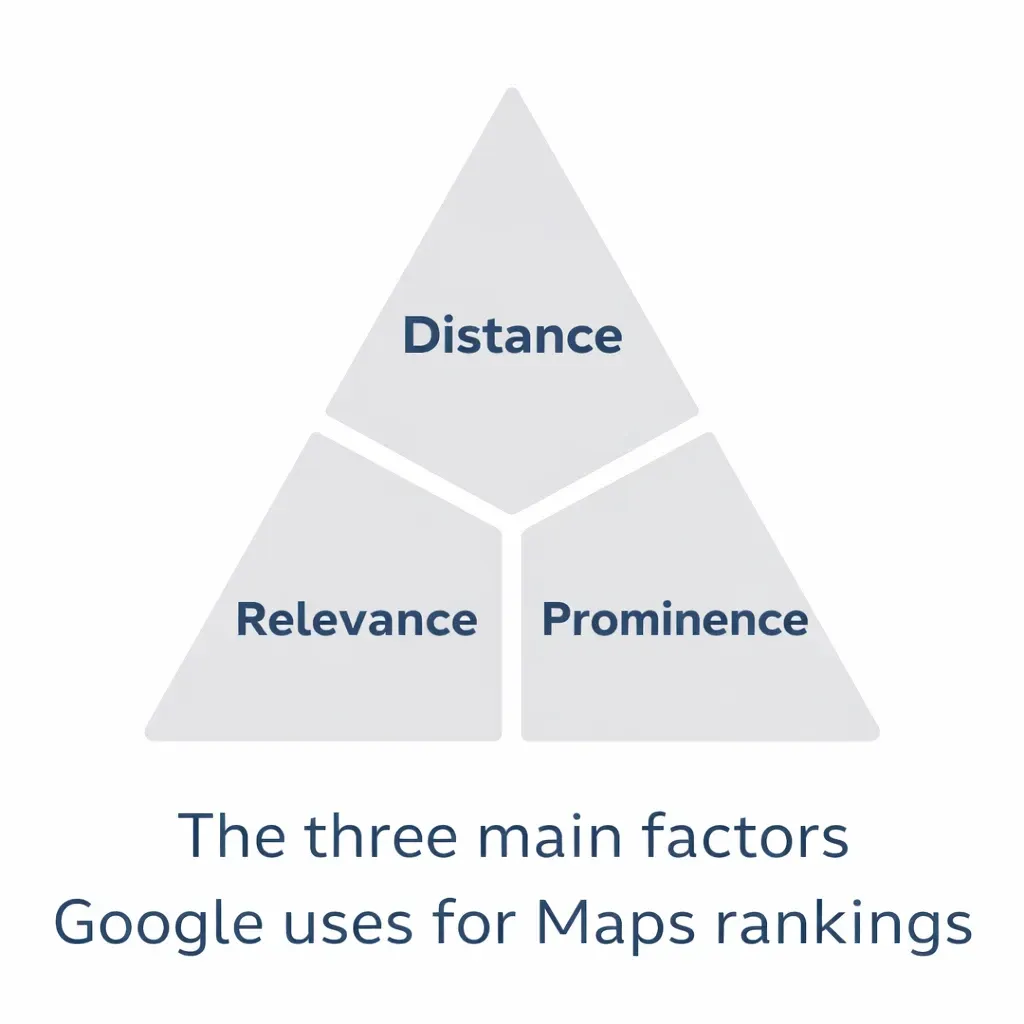
Google mainly looks at three things:
- Distance – how close your business is to the person searching
- Relevance – how well your business matches what they searched for
- Prominence – how established and trustworthy your business appears
Almost everything else feeds into one of those three.
Distance: The biggest factor most people ignore
Google Maps is location‑based by design.
When someone searches, Google starts by asking:
“Which businesses are physically closest to this person?”
That’s why you’ll often notice:
- You rank well near your office
- You disappear a few miles away
- Another business outranks you across town
This is normal.
You can’t optimize your way around geography.
No amount of reviews, website changes, or SEO work can move your building closer to the searcher.
Relevance: Does Google understand what you actually do?
Next, Google asks:
“Does this business match what the person is looking for?”
It decides this using things like:
- Your Google Business categories
- The services you list
- Wording on your website
- Your business description
- Content Google finds about your company
If your profile says “hair salon” but you mainly do extensions, or your site barely mentions your core service, Google may not fully understand your business.
When relevance is weak, you can lose rankings even if you’re nearby..
Prominence: Proof that your business is real and trusted
Prominence is Google’s way of measuring credibility.
This comes from:
- Reviews
- How long your business has existed
- Your website quality
- Business listings and consistency
- General online presence
This does not mean you need to be famous.
It just means Google wants confidence that you’re a legitimate, established business.
Why rankings feel random
Business owners often say:
“My rankings change every time I check.”
That’s usually because:
- you’re searching from different locations
- Google is testing results
- competitors changed something
- the search phrase is slightly different
Map rankings are dynamic and geographic, not fixed like traditional website rankings.
Why some small businesses outrank bigger ones
It’s common to see a small office outrank a large company because:
- they’re closer to the searcher
- their services are clearer
- their profile is better optimized
Size doesn’t matter nearly as much as location and clarity.
What this means in practice
You don’t “rank #1 in a city.”
You rank in areas.
Your visibility forms a loose bubble around your business address. That bubble grows or shrinks based on relevance and prominence.
This is the foundation of how local SEO actually works.
Understanding the size and shape of that bubble is far more useful than chasing a single ranking number.
The practical takeaway
If you’re trying to improve Google Maps visibility, the real questions are:
- Where do I currently show up?
- Where do I disappear?
- Is distance the main limit, or something else?
- Does Google clearly understand my services?
If you want to see this visually, a free visibility audit will map out exactly where your business appears in Google Maps and where it drops off, so you’re not guessing.
Until those are answered, most SEO work is guesswork.